

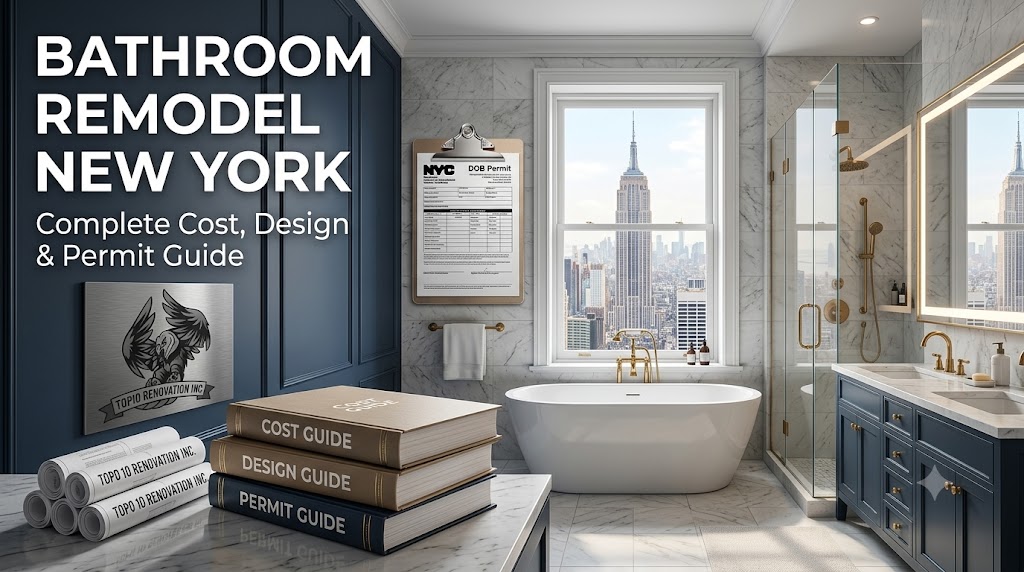
Planning a bathroom remodel New York homeowners can actually budget for isn’t as simple as picking tile and calling a contractor. Between co-op board approvals, DOB permit rules, pre-war plumbing quirks, and NYC’s unique labor costs, a bathroom renovation in this city plays by different rules than almost anywhere else in the country. This guide explains the real costs for 2026 permits, requirements for permits, and design requirements so that you’re able to design your renovation without a doubt, regardless of whether you’re located living in the middle of a Manhattan high-rise or an Brooklyn brownstone and an Queens co-op.
How Much Does a Bathroom Remodel Cost in NYC?
Bathroom remodel costs NYC projects generally are divided into three levels Understanding the place your project will land helps to set realistic expectations prior to when you speak to contractors.
| Renovation Tier | Typical Cost Range (2026) | What’s Included |
|---|---|---|
| Basic Refresh | $12,000 – $22,000 | New fixtures, vanity, toilet, standard tile, paint |
| Mid-Range Remodel | $25,000 – $45,000 | Custom tile work, upgraded fixtures, new plumbing lines, ventilation upgrades |
| High-End / Luxury | $50,000 – $100,000+ | Heated floors, custom cabinetry, walk-in steam showers, premium stone, layout changes |
Many factors drive NYC costs over averages across the country: access to buildings limitations (freight elevator schedule, working hours limits) disposal charges for removal of debris in high-density structures, and the additional labour required to deal with the deteriorating infrastructure that was common in prewar construction. A small bathroom renovation New York project typical in older homes with small footprints could cost anywhere from $15,000 to $30,000. This is because material and labor costs aren’t proportional to the square area.
What Drives Bathroom Renovation NYC Pricing Up or Down
If you’re looking to compare quotes for bathroom renovation NYC work the following factors account for the majority of the price variation:
- Plumbing relocation – moving a toilet, shower drain, or tub requires opening floors or walls and can trigger a reviews.
- Building type – Condos and co-ops often require modification agreement, insurance certificate and board signatures prior to the start of work that can take weeks, and often several hundred dollars of administrative costs.
- Waterproofing standards – standards for waterproofing NYC building code calls for specific waterproofing membranes to be installed behind tiles in areas that are wet; omitting the step can be a frequent reason for inspections that fail.
- Ventilation requirements – Bathrooms with no exterior windows should be ventilated by mechanical exhaust that is in line with standards, which could require modifications to ductwork.
- Material sourcing – Custom-designed stone, imported tiles and designer fixtures not only add costs, but they also increase the value of resales in NYC’s housing market.
Do You Need a Permit for a Bathroom Remodel in NYC?
It is among the most frequently asked questions that homeowners have before beginning an bathroom remodeling New York project, and the answer will depend on the scope.
You will generally require DOB permits for projects that include:
- Plumbing lines are being added or moved.
- Changes in the structure, such as the removal of walls
- Electrical power goes beyond fixture swaps
- Ventilation systems are modified
The majority of the time, you do not require a permit to:
- Replacing fixtures from the same place
- Retiling and rewiring plumbing without moving it
- Cabinetry swaps, painting or updating hardware
Even if a permit isn’t legally required, co-ops and condo boards typically require an alteration agreement as well as the proof of insured contractor status prior to allowing construction work to commence. If you file without the proper approval also known as “gut renovation” work off the books — could result in stop-work order as well as fines and other issues when you ultimately sell the property. Employing a professional who has experience in the NYC Department of Buildings process is typically the difference between a construction project which is on time and delays of months.
Design Considerations for Small NYC Bathrooms
A small bathroom renovation New York project comes with unique design restrictions However, a small area does not mean that it isn’t stylish. Some of the most sought-after strategies for include:
- Wall-hung toilets and vanities to create a visual flooring and make cleaning more simple
- Tiles with large-format to cut down grout lines, and make small spaces appear larger.
- Doors for pocket doors as an alternative to swing doors to increase usable floor space
- Shower enclosures made of glass frameless which eliminate the visual weight of a shower curtain or framed doors
- Vertical storage -cabinet with recessed cabinets for medicine as well as tall towers for linen in place of storage on the floor.
Toned-down lighter tile colors matte finishes that reduce reflections in smaller areas and warm-toned lighting are popular for 2026 and replacing the stark white shades that were prevalent in the previous decade.
Timeline: What to Expect
A simple bathroom remodel without plumbing modifications is typically completed within two to three weeks. A complete gut remodel that requires new electrical, plumbing permits, and plumbing generally will take six to ten weeks taking into account inspection schedules and, in the case of co-ops, work-hour restrictions imposed by the board (often limit to Mondays and Fridays only).
To get a sense of the precision required in the process of completing a Manhattan bathroom remodel, check out our bathroom remodeling in Manhattan Costs & ideas guide.
Choosing a Bathroom Remodel Contractor in New York
There aren’t all licensed contractors familiar with NYC’s specific requirements. Choosing an experienced local contractor, such as Top10 Renovation, can help streamline the remodeling process and reduce costly delays. Before hiring, inquire about potential contractors:
- Are you insured and licensed working in New York City specifically?
- Have you completed any projects in condo or co-op buildings that have board approval?
- Do you have references to similar bathroom designs of similar size in the past 12 months?
- Do you manage the DOB permit application or is that the homeowner’s charge?
- What is your usual timeline for an undertaking of this size and includes inspection delays?
Contractors who are able to respond clearly and with documents, is better able to stay the project on time in line with budget.
Frequently Asked Questions
Q: How much does a bathroom remodel cost in NYC?
A: Most projects range between $12,000 for a simple renovation to $100,000or more for a luxurious remodel, while mid-range upgrades generally costing between $25,000 and $45,000.
Q: Do I require the co-op’s board’s approval to proceed with the renovation of my bathroom?
A: Yes, in most situations. Co-ops and condo boards usually require an alteration agreement as well as the proof of insurance for contractors in the event of projects which do not require DOB permits.
Q: How long will the bathroom remodel process require for a bathroom remodel in New York?
A: A simple renovation can take between 2 and 3 weeks. A complete bathroom remodel with the plumbing as well as permit works usually will take 6 to 10 weeks.
Q: Do you need a permit for remodeling bathrooms within NYC?
A: A permit is usually required when moving plumbing or electrical systems, or changing the ventilation. Changes to fixtures and cosmetic updates typically don’t require one.
Q: What’s the typical price of a modest bathroom remodel within New York?
A: Small bathrooms in NYC generally cost between $15,000 and $30,000. This is due to fixed labor costs and materials costs which don’t scale down in proportion to square footage.
Final Thoughts
The success of a bathroom renovation nyc project comes down to a realistic budgeting process, understanding the specific approvals process for your building and working with a professional who has demonstrated NYC expertise. If you’re thinking of a simple revamp or a complete renovation, obtaining the permits and planning phase prior to the project’s start can save time and money in the long future.