


Older homes are a part of the reason that gives New York City its character. From pre war era apartments in Manhattan to historical brownstones in Brooklyn and traditional homes in Queens Older homes have an aesthetic appeal that modern-day construction usually lacks. However renovating an older house in NYC has its own unique issues that need careful planning, budgeting and a reputable home renovation contractor.
If you’re thinking of renovating your house from 2026, knowing about the remodeling process will aid you in avoiding unexpected costs and safeguard your investment.
Why NYC Homeowners Are Renovating Older Homes
Many homeowners opt to renovate their homes instead of moving due to increasing property costs, a lack of supply of housing in addition to the wish to alter their living spaces. Older homes typically have larger rooms and solid construction, as well as original woodwork and unique architectural elements which are hard to replicate in contemporary buildings.
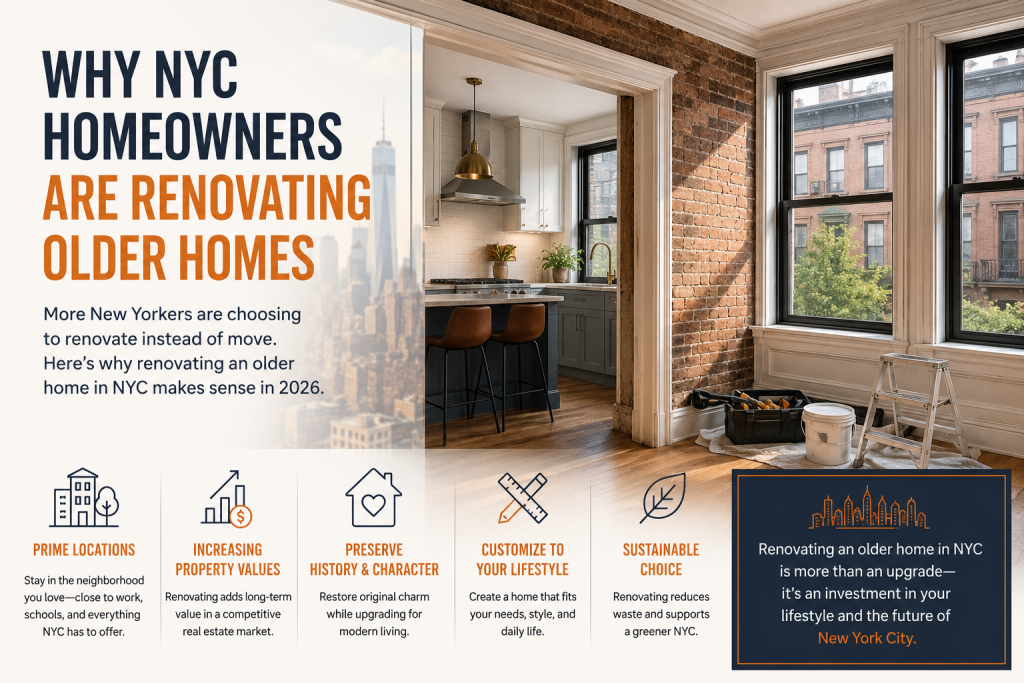
A well-planned renovation will improve efficiency, functionality comfort, and value of the property, while also preserving the original character of your home.
Start With a Professional Inspection
Before you decide on paint colors, tile, or cabinetry, make sure you schedule an in-depth inspection of the building.
Older NYC homes might include:
- Old electrical systems
- Aging plumbing lines
- Uneven floors
- Water damage
- Structural problems
- Paint with lead or asbestos
- Older renovations that don’t conform to the current building codes
Being aware of these issues in the early stages helps to create a realistic budget for renovations and helps avoid major delays once construction starts. Experts suggest evaluating mechanical and structural systems before focusing on cosmetic improvements.
Also Read : Top Home Improvement Tips for Queens NY Homeowners: What to Renovate First
Understand NYC Permit Requirements
One of the main distinctions between renovations within New York City and other cities is the process for obtaining permits.
Based on the project’s scope the project might be required to:
- NYC Department of Buildings permits
- Landmark Preservation approvals
- Board approvals for condos or co-ops
- Plumbing permits
- Electrical permits
Layout modifications and the removal of walls, relocation of plumbing and structural modifications usually require the approval of a professional and plans before construction can begin.
Engaging an skilled NYC general contractor will simplify the process and decrease the possibility of project delays. It is not uncommon for permit requirements to affect construction timelines in New York City.
Create a Realistic Renovation Budget
One of the biggest mistakes that homeowners make is to underestimate the costs of remodeling.
In 2026, costs for renovations for Manhattan, Brooklyn, and Queens are determined by:
- Costs for labor
- Material pricing
- Building rules
- Permit fees
- Delivery limitations
- Design and design services
- Waste removal
For older houses the hidden issues are typical. When walls are smashed contractors might discover faulty wiring, damaged plumbing or structural problems which need immediate attention.
The majority of home renovation experts advise establishing an emergency budget of 15 to 20 percent to cover unexpected expenses.
Preserve Original Architectural Features
One of the advantages of homes built in the past is the uniqueness of their construction.
When you can, try to preserve:
- Original hardwood flooring
- Crown molding
- Decorative millwork
- Historic fireplaces
- Solid wood doors
- Stair railings
- Vintage architectural details
A lot of these are a challenge and costly to recreate in the present. The preservation of these features can enhance the value and character of your house while maintaining its historical appeal.
Upgrade Electrical and Plumbing Systems
While aesthetic upgrades are fun but infrastructure upgrades should always be first.
Many older NYC homes still have outdated electrical panels, outdated plumbing, and wiring that aren’t up to the demands of today.
A renovation is the opportunity to:
- Include dedicated circuits for appliances
- Upgrade service panels
- Repair the old lines of plumbing
- Increase water pressure
- Install fixtures that are energy efficient.
- Incorporate smart home technology
Making these investments earlier can save you from future repairs, and improve the durability for your house.
Plan Your Layout Carefully
Many of the older homes were constructed to accommodate different lifestyles from today’s homeowners.
Some of the most sought-after remodeling improvements in 2026 include:
- Open-concept kitchens
- Larger kitchen islands
- Bathrooms that are expanded
- Showers with walk-in doors
- Home offices
- Storage solutions that are custom-designed for you.
- Multifunctional living spaces
But, not all walls is able to be eliminated. Limitations in the structure, building regulations and mechanical systems in place could affect the layout of a room.
A skilled renovation team will help you identify ways to increase flow and efficiency while preserving the structural integrity.
Expect the Unexpected
Any homeowner who wants to renovate an older home must be prepared for unexpected events.
Common discoveries during demolition include:
- Hidden water damage
- Termite damage
- Problems with mold
- Renovations that were not done correctly in the past.
- Structural deficiencies
- Code violations
Homeowners often share stories of renovation with unexpected plumbing repairs as well as electrical upgrades. concealed structural repairs after demolition starts. This is especially true for older homes.
The trick is to build flexibility into your budget and timeline.
Choose Materials That Balance Style and Durability
Modern homeowners are looking for more than only aesthetics.
The most popular renovation trends for 2026 include:
- Quartz countertops
- Large-format porcelain tile
- Custom millwork
- Energy efficient windows
- Smart lighting systems
- Plumbing fixtures that save water
- Hardwood flooring with durable, engineered construction.
The choice of premium materials can cut down on maintenance costs and increase long-term performance, while also improving the overall look of your house.
Should You Live in Your Home During Renovation?
It is based on the scope of the home renovation project.
For smaller projects, staying within the house may be feasible.
For full home remodeling in NYC, especially projects involving bathroom renovation NYC, kitchen remodeling NYC, or significant structural work, temporary relocation is often the most practical option.
Noise, construction dust, utility interruptions, and restricted access can make daily life difficult during major renovations. Many home renovation contractors in NYC recommend alternative accommodations for extensive remodeling projects.
Hire an Experienced NYC Remodeling Contractor
The most crucial factor in any renovation is choosing the right contractor.
Find a contractor who includes:
- NYC Renovation experience
- A valid license and insurance
- Transparent estimates
- Services for managing projects
- Permit assistance
- Locally based strong reviews
- Communication that is clear
A professional who is familiar with Manhattan, Brooklyn, and Queens building regulations can help you to avoid costly errors while keeping the project on time. Top10 Renovation, a trusted local NYC renovation contractor, helps homeowners complete remodeling projects efficiently and in compliance with local requirements.
Also Read : Interior Renovation in NYC Hiring the Right Remodeling Contractors in Queens
Final Thoughts
Remodeling an old home in NYC could be among the most profitable investments that homeowners can make. While older homes typically come with hidden issues but they also offer unbeatable quality, character and value for the long run.
When you carefully plan and budgeting with a realistic approach, while preserving original features and collaborating with an experienced renovation team, you will be able to effectively transform an old house into a comfortable, modern house that is a perfect fit for your needs in 2026.
When you’re looking to remodel an old brownstone in Brooklyn or upgrading your Manhattan apartment or updating an Queens residence, the best method can improve both the aesthetics and functional aspects while securing your investment over the years to in the future.