

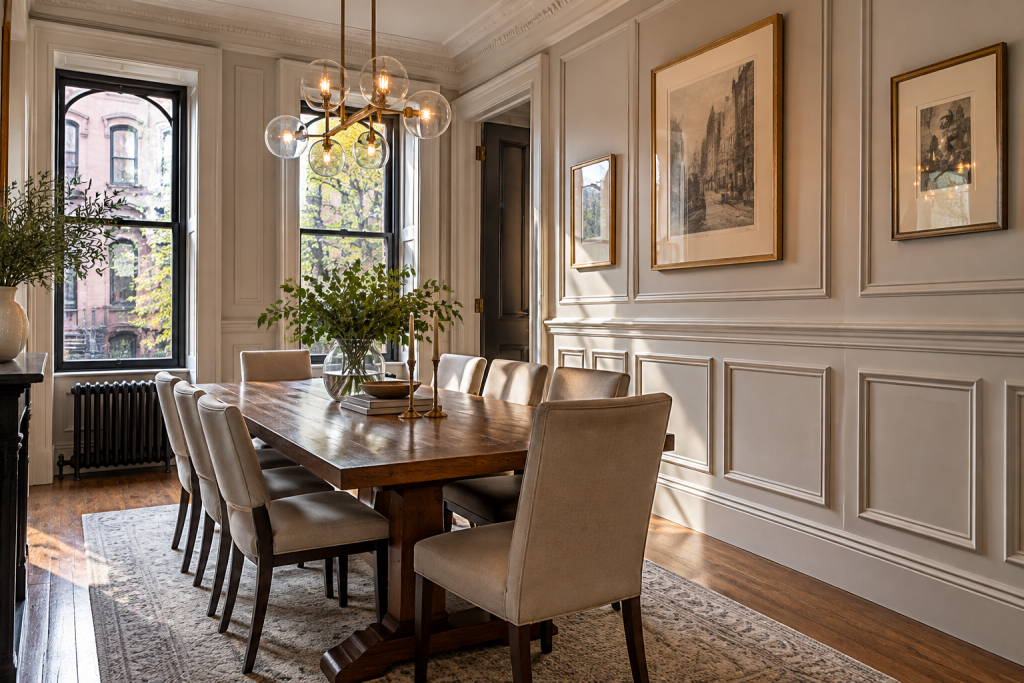
You’re staring at a flat, boring wall in your dining area and imagining crown moldings, picture-frame panels or that nifty wainscoting you keep seeing in those renovated Park Slope brownstones. After that you start googling and run into the same brick wall every Brooklyn homeowner encounters: half of these articles were written for suburban colonials with 9-foot flat walls and no code restrictions, not one explains what happens when you try to install trim on a thing which has been in place for 120 years and is filled with plaster with baseboard heat running along it.
Wall trim is one of the simplest but highest-impact most-misunderstood upgrade to this Brooklyn dining room. If done correctly, this can turn a rental grade room into an architectural element of the house! It can break plaster, collide with existing molding, or cost a homeowner three times the expected amount and often without considering your building’s walls. This guide breaks down the real styles, real costs, and the brownstone -specific details that decide whether a trim project goes smoothly or turns into a demo surprise.
Quick answer: Wainscoting and wall trim projects for a typical Brooklyn dining or living room (about 120–180 sq. Typical costs for this – a standard model liner with an area of 40 to 120 sq. Cost: Faux/appliquéd wainscoting with pre-primed medium density fiberboard (MDF) panels $2,500–$5,500 Traditional board-and-batten or picture-frame molding runs $4,000–$8,000. However, custom millwork brooklyn that seeks to perfectly replicate a historical detail for use in a pre-war home can begin at $8000—and run up closer to $12000+.
Is Wainscoting Worth It for Brooklyn Homes?
To homeowners in Brooklyn, wainscoting is not just an added piece of decoration. Whether you live in a brownstone, pre-war apartment, or historic homes, properly designed wall trim is used to enhance the character of a room and complement the architecture of the property. The trick lies in using the right mix, material, and technique to bring out better results without harming the structure of the house.
Why Trim Choices Are Different in a Brooklyn Dining Room
Before you start: On national design blogs, wall trim is a paint-nigh-closest weekend project. But if we are in a Brooklyn brownstone, co-op, or pre-war rental conversion then it’s more like a mini carpentry project with its accompanying building-specific restrictions.
- Plaster walls, not drywall – Unless you live in a new construction building, most pre-war Brooklyn homes – Park Slope, Fort Greene, Cobble Hill, Bed-Stuy – have original wood lath under their horsehair plaster instead of modern drywall. Plaster does not hold screws or nails alike drywall, and can easily crack or crumble if a contractor doesn’t find the studs right, or anchored correctly. This is, by far, the most popular reason a DIY wainscoting project in an old Brooklyn dingbat turns into a disaster.
- Existing moldings need to be matched, not ignored – Some of the original baseboards, picture rails or ceiling medallions have survived since the building’s construction. Trim that is incompatible in proportions or profile with the existing millwork will appear as obviously tacked on rather than authentic to the room, which is one of the quickest ways to diminish resale value for a renovation in a historic district.
- Baseboard heat and radiators change the layout – Most wainscoting height lines land directly where heating is run through cast-iron radiators or baseboard units along exterior walls in a prewar building and Brooklyn finds an especially large target there. As a result, measurements differ from what a general tutorial assumes, because panel layouts now have to route around these fixtures not through them.
- Landmarked and historic districts add rules- If your home lives within a local historic district (which include large swathes of Park Slope, Brooklyn Heights and Fort Greene), exterior-facing mods are limited to what the Landmarks Preservation Commission allows — but trim work inside often goes unchecked. However, co-op and condo boards can have their own rules when it comes to interior alterations, so be sure to quickly review those before placing an order.
Wainscoting vs Wall Molding vs Custom Millwork: Which Option Is Right for Your Brooklyn Home?
| Feature | Wainscoting | Wall Molding | Custom Millwork |
| Average Cost | $2,500-$8,000 | $1,500-$5,000 | $8,000+ |
| Installation | Medium complexity | Faster installation | Highly detailed |
| Best For | Dining rooms, apartments | Budget upgrades | Historic homes |
| Customization | Medium | Medium | High |
| Ideal Brooklyn Homes | Brownstones and pre-war apartments | Modern apartments | Original architectural interiors |
Instead, wainscoting, wall molding and custom millwork give the same visual effect but meet different home renovation objectives. Wainscoting usually encompasses a more substantial lower wall area, with greater architectural impact. On the other hand, wall molding emphasizes decorative framing and is generally preferred for quicker aesthetic redesigns. When restoring historic Brownstone-style Brooklyn houses – original craftsmanship must be matched by new details, and custom millwork is the only option.
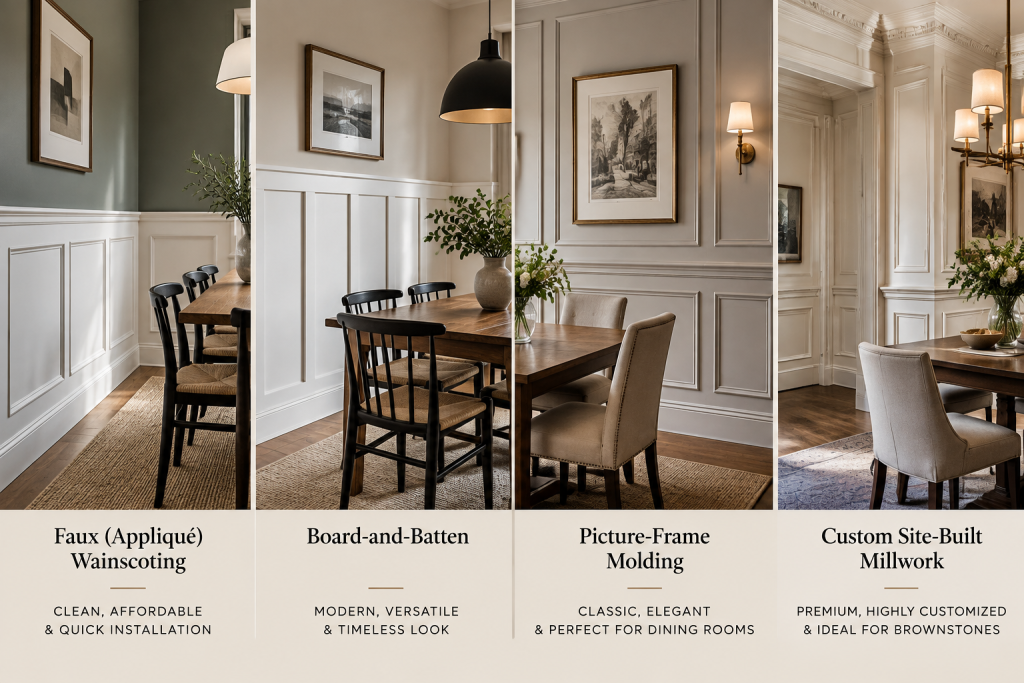
1. Faux (Appliqué) Wainscoting – $2,500–$5,500
Pre-made MDF or PVC panel kits installed directly over existing plaster or drywall that are caulked and painted as a seamless surface. It’s also the cheapest and easiest way to achieve wainscoting, which makes it a great option for renters or co-ops who’d rather not spend money on alterations, or homeowners who just want a fresh clean upgrade before having people over or trying to sell! The catch: less depth and shadow-line detail than site-built trim, and panels must be carefully shimmed on uneven plaster walls.
2. Board-and-Batten — $4,000–$7,000
Wooden vertical batons, set over a lower section of wall painted or wallpapered – more modern farmhouse meets brownstone in style. This effect particularly complements the deeper ceiling heights typical of Fort Greene and Clinton Hill row houses, perfect for when the vertical rhythm looks intentional, not.fussy. Yet stud-finding on plaster walls can be a real and maybe requiring additional labor, which is where an experienced installer in your area really pays off.
3. Picture-Frame Molding — $4,500–$8,500
Rectangular molding panels that run under a chair rail were once a standard in formal dining rooms through Brooklyn Heights and Park Slope homes that went up as far back as the late 1800s. This style tends to look most “at home” in pre-war interiors because it echoes the proportions builders originally used in that era — a detail that matters if your goal is a renovation that reads as original to the house rather than an add-on.
4. Custom Site-Built Millwork — $8,000–$12,000+
Carpenter-installed to match the profiles of your existing moldings exactly, same reveal depth, same rail width, same paint-grade finish. It is literally the only option that consistently resolves a “doesn’t match the rest of the house” issue in a historic Brooklyn interior and it’s done all the time as dining room adjoining original parlor or living room moldings to connect them visually.
Cost Breakdown by Component
| Component | Typical Brooklyn Cost | Notes |
| Materials (MDF, PVC, or paint-grade wood) | $600 – $3,500 | Site-built custom millwork uses the higher end |
| Labor & installation | $1,200 – $6,000 | Plaster walls typically add 15–25% vs. drywall |
| Chair rail / cap molding | $300 – $1,200 | Often bundled into total project cost |
| Priming & painting (2 coats + trim color) | $500 – $2,200 | Two-tone finishes (wall color + trim color) cost more than single color |
| Radiator/baseboard heat routing | $200 – $900 | Needed when heat fixtures interrupt the panel line |
How Long Does Wainscoting Installation Take in Brooklyn?
The installation timeline depends on the design, wall condition, and finishing requirements. A simple panel installation may take only a few days, while custom millwork projects require more time because each component is measured, built, adjusted, and finished on-site.
| Project Type | Typical Timeline |
| Faux MDF/PVC panels | 2–4 days |
| Board-and-batten | 3–5 days |
| Picture-frame molding | 3–7 days |
| Custom millwork | 1–2 weeks |
Further, older Brooklyn homes typically will need to prepare the existing plaster walls since they probably aren’t perfectly level, existing trim may also need to be matched and any heating elements or trim around the windows can factor into placement of panels.
The Most Common Pitfall for Homeowners and How to Avoid It
Choosing the style is historically NOT where most Brooklyn wainscoting projects go wrong – but skipping a plaster assessment before ordering your materials is. Homeowners look at some photos online, order a panel kit sized to fit normal drywall install, then halfway through the project realize their walls are out of plumb by ½ an inch or more (very common in row houses built pre-1930), and every panel needs custom trimming on-site instead of fitting perfectly from the factory.
Solution: You have a contractor assess wall condition, take exact measurements before anything is ordered not after. A good installer who knows Brooklyn brownstones will know how to dodge radiator pipes, match existing molding reveals and anchor properly into plaster and lath instead of just using adhesive alone in old walls, this almost always fails in a year or two.
Common Wainscoting Mistakes Brooklyn Homeowners Should Avoid
Most wainscoting problems arise prior to installation. Incorrect siding style, neglecting architectural details that already exist and wrong materials can detract from the look of the place and even affect durability.
- Installing trim without checking the condition of plaster walls.
- Horizontal panel proportions, without respect to the ceiling height.
- Interfering with Radiators/Heating System
- Fit and finish with newer trim profiles that clash with historic interiors.
- Going without correct caulking preceding to watering, or surrendering the caulk before it dries.
How Top10 Renovation Approaches Trim & Wall Detail Work in Brooklyn
Top10 Renovation brings the same detail-first approach to wall trim and wainscoting that we use across our interior painting and custom millwork projects throughout Brooklyn and Manhattan. Our in-house carpenters can replicate existing molding profiles found in pre-war Park Slope and Brooklyn Heights residences, and our painter finishes every panel with the same formula – a two-coat, primed-and-caulked process we use on all our full-interior-renovation projects – so the trim reads as original to the home rather than an addition.
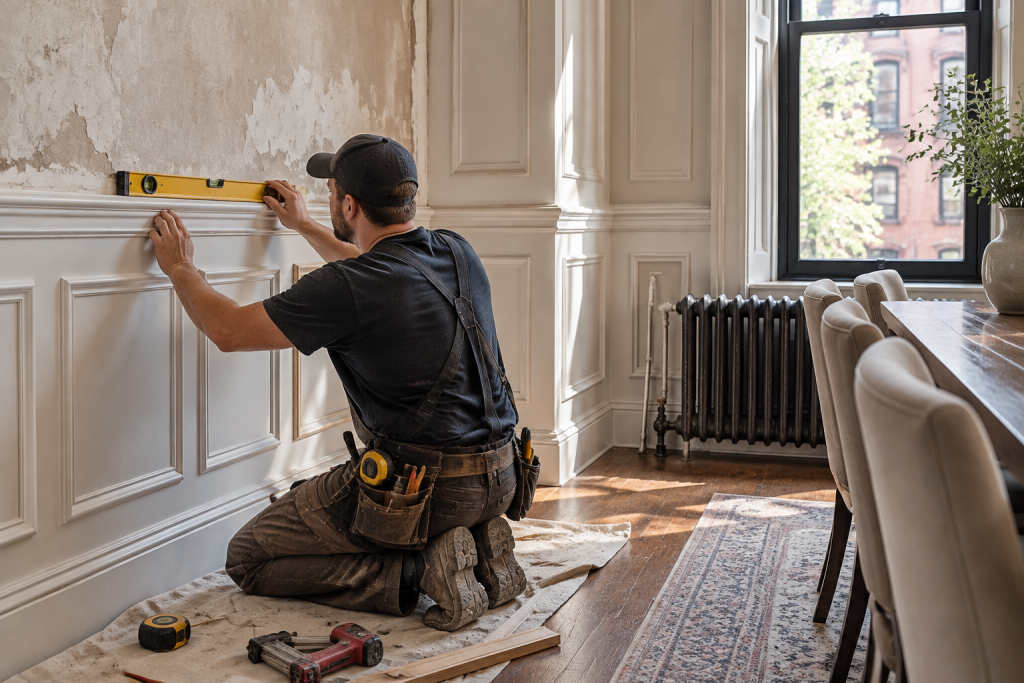
If you’re planning a dining room refresh anywhere in Brooklyn, get in touch with Top10 Renovation for a free in-home consultation. After evaluating your walls, moldings and heating fixtures, we’ll suggest a style for you and give you an accurate written estimate — not the general calculation from some online formatter.
Neighborhoods Where Wainscoting and Custom Millwork Are Popular in Brooklyn
In areas of Brooklyn with brownstones, pre-war apartments and other old interiors, too much carved woodwork especially wainscoting and ornate wall trim has been known to offend. Many homeowners in Park Slope, Brooklyn Heights, Fort Greene, Cobble Hill and nearby neighborhoods opt for custom trim solutions that allow them to preserve their homes’ architectural integrity while modernizing.
Frequently Asked Questions
Q: How much does wainscoting cost in a Brooklyn dining room?
A: Brooklyn dining room wainscoting projects generally range from $2,500–$12,000 depending on design — faux panel wainscoting starts near $2,500 while virtually identical custom site-built millwork replicating existing pre-war moldings may rise to near $12,000 or more.
Q: Is it possible to install wainscoting on plaster walls in my brownstone?
A: Yes, if you hit the studs/lath correctly – because common drywall anchors/adhesives are no match for original plaster. A typical installer for pre-war Brooklyn homes will use mechanical fasteners into studs, and plaster-rated construction adhesive.
Q: Do I need co-op or condo board approval to add wall trim?
A: Interior trim work is mostly cosmetic in nature and does not require board approval in most buildings, since it does not involve plumbing, electrical or structural changes. However, be sure to check with your building’s alteration policy (especially if you live in a co-op that may have stricter rules regarding interiors).
Q: What’s the difference between wainscoting and board-and-batten?
A: Interior trim work is mostly cosmetic in nature and does not require board approval in most buildings, since it does not involve plumbing, electrical or structural changes. However, be sure to check with your building’s alteration policy (especially if you live in a co-op that may have stricter rules regarding interiors).
Q: Does wainscoting add value to a Brooklyn brownstone?
A: Yes, if done to scale and period style of the home. Buyers and appraisers often cite trim work that references details from a brownstone’s original molding profiles as an indication of a careful, detail-centric renovation, especially in historic districts like Park Slope and Brooklyn Heights.
More Blogs
- Bathroom Remodeling in Queens: Real Costs, Co-op Rules & What Actually Goes Wrong
- Timeless Renovation Features That Never Go Out of Style for NYC Homes
- How Much Does Apartment Painting Cost in Manhattan in 2026?
- Custom Millwork NYC: Costs, Design Ideas, and Expert Advice for Brooklyn Homeowners
- NYC Home Renovation Guide: Remodeling an Old House in 2026